
Location: St Barts
We arrived in St Barts yesterday afternoon after motor sailing for most of the day from Sint Eustatius. The wind was 20 knots on our starboard bow, and progress was slow. We anchored in Gustavia around 3 pm, and as the only space available on the dock didnt have access to fresh water, we decided to stay at anchor for the night. Water is in short supply on St Barts. The whole island is golden with rocks and hillsides deprived of green, the soil unable to absorb the sporadic rainfall. Historically, a dry place of hardship, the island was shunned by the indigenous peoples of the Caribbean for permanent settlement, and then passed back and forth between colonial powers (including the Swedish, briefly) who never really wanted it. Perhaps its most notable occupants before more recent times were the crew of the French buccaneer Montbars the Exterminator, who used the island as a base as they terrorized the cities of the Spanish Main in the 17th century.
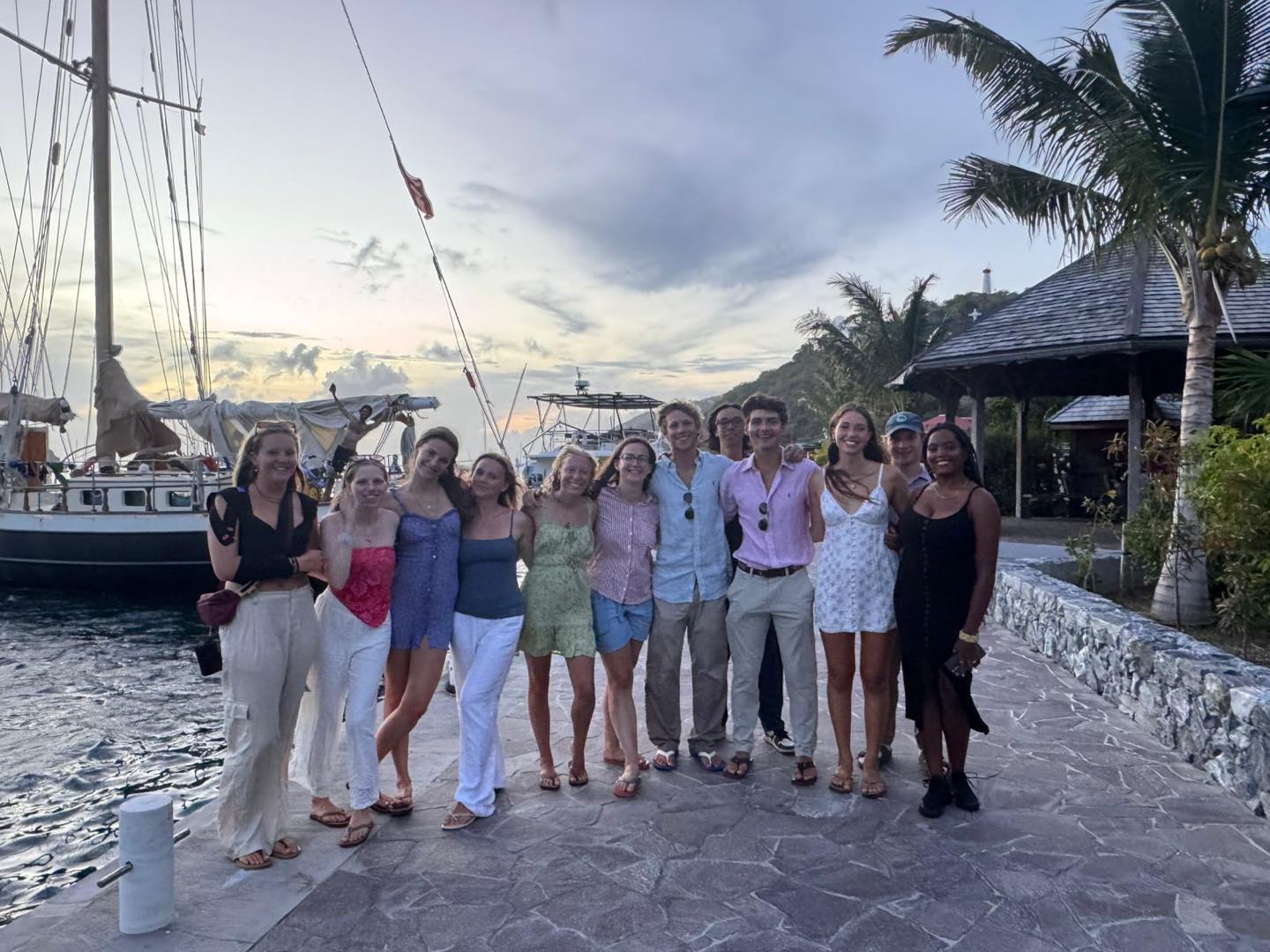
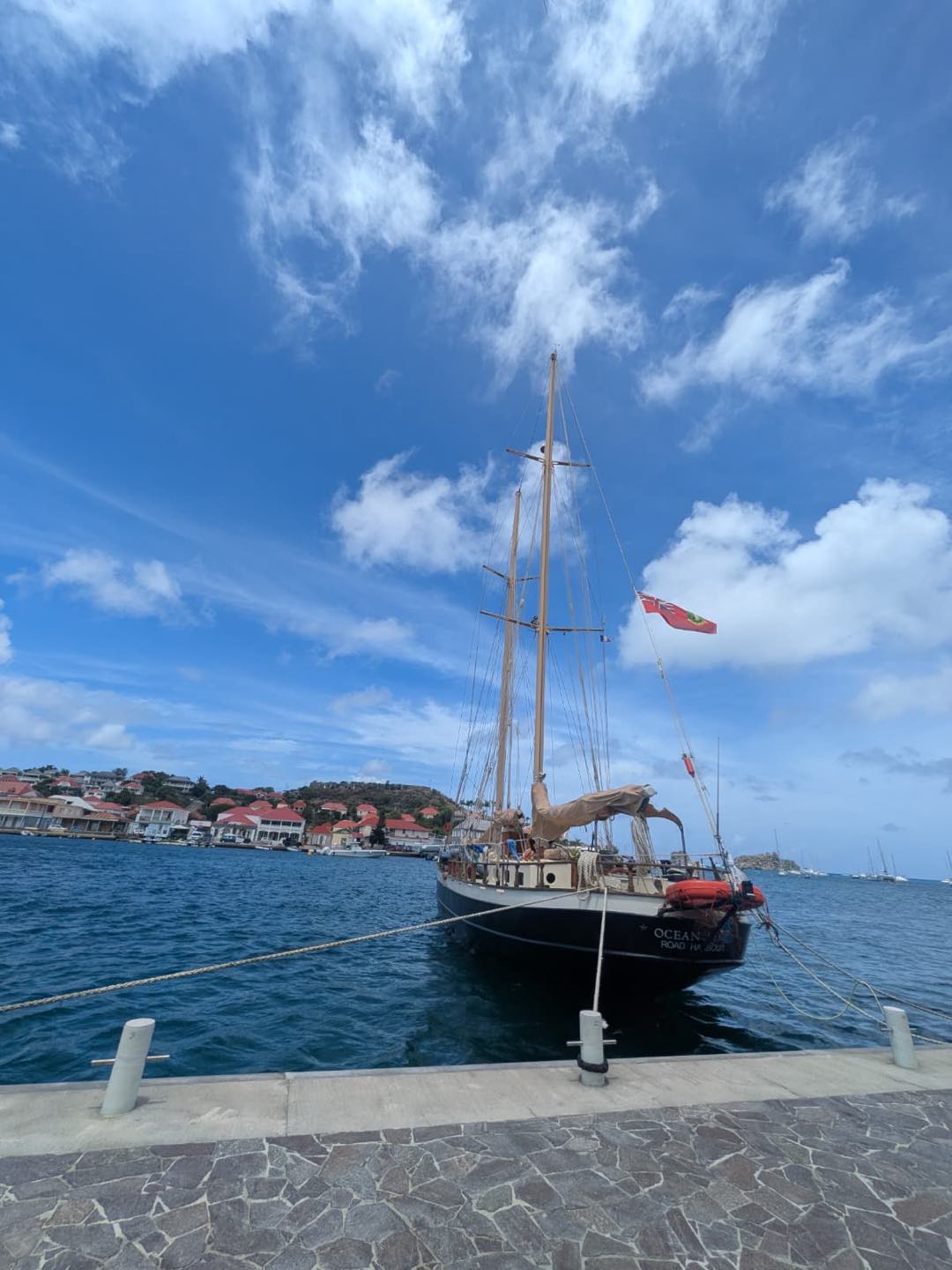
This morning, a spot opened up in the marina where we could fill up with water from the islands desalination plant, and so we pulled up anchor and moved the boat into downtown Gustavia. We dropped both of our anchors on the far side of the harbor, and then reversed onto the dock in between two glittering white motor yachts. In modern times, St Barts is known for being an expensive destination frequented by movie stars and fashionistas. We let the students on shore, and they set off to walk amongst the fancy cafes and designer clothing stores. In the evening, they all went out to dinner together for a night out, wandering between the bars and restaurants. Ocean Star stands out in St Barts; a traditionally rigged schooner with oiled cap rails and faded sails, surrounded by luxury boats, cars, and hotels, as if we had been pulled directly out of the islands own desolate past. As elsewhere in the Caribbean, Ocean Star gives a window into the layers of history here, going back deep into time.